Monday, December 25, 2017

conversation starters

from The Splendid Table, NPR 
https://www.splendidtable.org/story/lets-get-this-party-started-conversation-starters-for-your-holiday-party
Conversation Starters from Henry Alford
  • What was the best thing you ate this year?
  • What new friends did you make this year?
  • What do you wish you were doing more of in your life?
  • What was the most helpful invention of the past 100 years?
  • What was the most destructive?
  • What are the first three things you would do if you were President?
  • Who would you cast in the starring role of a movie about your mother?
  • Describe your own version of heaven.
  • In a world with laser surgery, space travel, and aerosol cheese... why hasn't anyone invented a pill that makes you feel like you got a good night's sleep?
  • How might the world be made better if, outside of crises, the entire country had a 24 hour-long global moratorium on talking?
Champagne%20glasses%20 %20poike thinkstock%20 %20511738576
Some additional conversation starters from The Splendid Table
  • What do you like most about yourself?
  • Did you ever get into trouble as a kid? 
  • Did you/do you like school? 
  • Who was your most memorable teacher?
  • Tell the story of your first kiss.
  • If you could do anything, now, what would you do? 
  • What age were you when you really knew who you were?
  • What was your first job? 
  • Do you have any phobias? 
  • What do you find the most attractive in the opposite sex?
  • Do you like to flirt?

Saturday, December 9, 2017

nostalgic

I'm feeling nostalgic for the time, a few years ago, when I was so "into" the ideal of hospitality--host and guest coming together authentically with recognized (or not) reciprocal roles and duties.

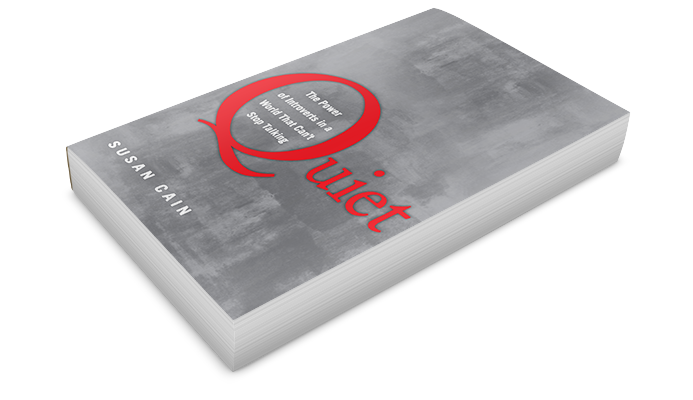
Now, after having read Susan' Cain's Quiet quiet-book-softcover


qr_03.pngand reading the weekly newsletter from The Quiet Revolution,

 I'm rethinking how exhausting it is to be committed to hospitality.
Case in point...a periodic gathering of acquaintances for which I prepare something really special and receive praise for my culinary contributions.  And that's where it ends.  I never seem to have as good a time as everyone  else seems to be having. I can't appreciate the inside jokes. I fail dismally at small talk.  I feel awkwardness mount to anger and a genuine feeling of injustice.

I return home, vowing not to return but find myself going back.

I could catalogue the perceived snubs and feel mighty indignant. But then, I always come back to my observation that everyone else seems to be enjoying themselves--a lot!--and that, despite my strategies to keep my conversation light, not be sensitive to perceived slights, and listen attentively to others' stories, complaints, and jokes, nothing works.

Why do I care so much?  Well, all those studies say that I'm better off with a slew of friends.  And there's my sincere commitment to hospitality.  Plus, I can't shake the hope that I'll soon be accepted.

So is it genuineness or pride that keeps me returning?

Sunday, June 28, 2015

Life is a Prime Number.

Image result for 17 camels and 3 sons

A father’s will was read.  Divide my 17 camels among my 3 sons accordingly: ½ to the oldest, 1/3 to the middle son, and 1/9 to the youngest.  But how were these divisions possible? The 3 sons quarreled.  Finally, they decided to go to a wise woman.  The wise woman listened patiently about the will. She thought hard.  She went away. And when she returned, she added her 1 camel to make 18. Then, she gave the oldest son 9, the middle son 6, and the youngest son 2 camels—according to the will.  This left 1 camel.  The sons quickly agreed to give the extra camel back to the wise woman. They returned home happy.  

ORIGINAL LESSON: Negotiation and problem solving is the struggle to find the 18th camel, i.e. the common ground, in order to resolve any issue.  Read Ury's The Third Side. 

BUDDHIST LESSON: If we applied wisdom and compassion, how could this problem have been resolved more simply or even avoided all together?


the unexamined life imposed

Image result for clothes line


A young couple moves into a new neighborhood. The next morning while they are eating breakfast, the young woman sees her neighbor hanging the wash outside. "That laundry is not very clean; she doesn't know how to wash correctly. Perhaps she needs better laundry soap."
Her husband looks on, remaining silent. Every time her neighbor hangs her wash to dry, the young woman makes the same comments. A month later, the woman is surprised to see a nice clean wash on the line and says to her husband: "Look, she's finally learned how to wash correctly. I wonder who taught her this? "
The husband replies, "I got up early this morning and cleaned our windows." And so it is with life... What we see when watching others depends on the clarity of the window through which we look.

Saturday, June 27, 2015

Life Without Labels

Someone sent me this article...

http://www.nytimes.com/2015/06/27/us/scotus-same-sex-marriage-gay-culture.html?hp&action=click&pgtype=Homepage&module=b-lede-package-region&region=top-news&WT.nav=top-news&_r=1

When I was working on my dissertation, I read a lot about "race" and came to the conclusion that it's a cultural construct with no biological basis. (It's like Darwin's announcement that the category of species, for example, is basically arbitrary and merely convenient.) Hence the quotation marks. 

 My takeaway from this article is that like being gay, belonging to a "race" or any other group that claims oppression or another level of discrimination affords a cherished victim mentality.  I often wonder, what would these group lose without the labels?  Obviously, oppression often garners not just solidarity but reverse exclusion.  I'm, _______, but you're not ____________.  Look at the recent news stories of gender and "race" crossing. 

I learned in my Cognitively-Based Compassion Training course, that we all share certain needs.  We all want to feel safe, loved, healthy, peaceful, joyful, and appreciated.  We  all  want to feel special. And in the West, it seems that feeling special computes to feeling entitled. Not  so much because of what we've worked for or accomplished--but more for what we can grab as quickly as the 99 cent value item.

So I grant, like Darwin does, that we need categories.  They organize, simplify, and unify life.  But what if we restrict our human labels to what we earn?  The Greeks had this figured out.  They categorized 2 kinds of honor: ascribed honor as a result of power, position or birth and acquired honor gained by excelling in the honor/shame game.  What if we adopted only earned
labels?  For me, that would be mother, professor, wife, meditator...  If I didn't work hard to achieve it, I don't earn the designation. I realize that I'm reducing life to a performative level.  Think Judith Butler's Gender Trouble.  But just think about how much flexibility and freedom that would give us.  Noone would be called a girl or a boy until each child chose and lived that designation.  And what would that living even mean?  Is it meaningless?

What do we have to lose if we dispensed  them on the basis of clearer criterion?  Would we become more or less rigid?

Just a thought...

Saturday, June 20, 2015

Self-examing beyond a race problem

On the heels of the Charleston murders, I watched Jon Stewart struggle to deal with the "race problem" in the US.  I thought immediately of Du Bois: "How does it feel to be a problem?" I grant that the US has a race problem. But I worry that when we identify one area of our aggression, we ignore a bigger picture. 

Let me turn to Faulkner.  He ends Absalom, Absalom!  with an exchange about hatred. Shreve: "Now I want you to tell me just one thing more.  Why do you hate the South?" We don't hear Quentin's reply.  We may think we read his reply, but we really read the narrator's rendition of Quentin's thoughts: "I don't hate it he thought, panting in the cold air, the iron New England dark; I dont. I dont! I dont hate it! I dont hate it!”  The End. It's up to Shreve to figure out if that's true.  Good luck.  It's up to us to make sense of the ending and the entire series of layered stories.  I've thought of this ending so much in the wake of the South Carolina killings, and here's what I've come up with. End the book with Shreve asking, "Why do you hate?" No South. No specific problem. 

The US still has a race problem. A human trafficking problem. A child abuse problem. A wife beating problem. A glass ceiling problem. A sexual orientation problem.  An aged people problem. The US has a love affair with violence.  I can't understand how, amidst anti-bullying, anti-racism, anti-sexism, etc. campaigns, sports figures in the US earn millions of dollars to hurt each other.  I thought of this when I listened to Stewart point out that the US spends millions of dollars and thousands of lives protecting its citizens'freedom.  And part of that freedom is to box, wrestle, tackle, trash talk, and bully each other--in public, for lots of money, and with great acclaim.  Of course, this is not just the US.

Humans have a hate problem.  Ironically, it doesn't serve us well.  It makes us less productive.  It endangers our safety.  It ruins our health. And it enervates our happiness.

So why do we hate?  Thomas Hobbes would answer that it's because we fear. We fear, especially, death.  For Hobbes, that's the root of our competitiveness, aggression, greed, and hatred.  Buddhism might agree that it's our inability to accept our impermanence that causes so much of our suffering.

I don't have the answer.  That's not the point of this blog.  My point is that isolating a crime to one problem allows me to overlook any hatred I have toward anyone outside that problem. Instead, I'd be a better person to ask myself, "Why do I hate?"

Tuesday, May 19, 2015

letting go of leftovers

If I record here the background of this post, you might conclude that this whole issue is "a tad petty," as one responder has already judged.  So I'll skip to the broader ethical issues.

This post's etiquette quandaries involve leftovers.

1. The big one: Who owns the leftovers--the person who ate the original meal; the owner of the refrigerator storing the leftovers; the person who paid for the meal; or someone else?
2. How long does that ownership remain or does that depend on the food, e.g., 2 days for liver but 10 mins. for fried chicken?
3. Can you gift your leftovers to a specified recipient, which precludes anyone else enjoying it?
4. If no one wants the leftovers, must the person who made them dispose of them?  Out, demon!
5. Just to seem like you're going to eventually eat someone's cherished food gift, how long must you wait until you can pitch Grandma Bessie's lasagna with impunity?

Sadly, I could continue recording etiquette questions revolving around leftover food.  But I'm already impressed that this is more than "a tad petty."  After all...one of the synonyms for "leftover" is "scrap."  Says it all.

So go ahead and eat my leftovers.  I'm letting it all go.  Total Zen of me.

Except, of course, fried chicken.  Hands off.

Friday, July 25, 2014

Cell Phone or Selfone?

I've read 2 articles slamming cell phone use at restaurants.

The first article reported on a restaurant that was plagued with "slow service" reviews.  The owner decided to compare the surveillance footage from 10 years ago to a recent night and found that it wasn't that the service was slow.  It was that the customers were so preoccupied with their cells--taking selfies, photoing the food, checking their texts, and talking, which increased the average time at the table by 50 minutes. Think about that--50 minutes per group who eats per night.  That's some serious change that the restaurant has lost.  Plus, they're getting slammed for poor service.  http://www.quickmeme.com/p/3vy90w

The second article proposed a challenge.  All phones on the table face down.  The first person to even touch a phone pays.  http://gizmodo.com/5873684/force-smartphone-addicts-to-pay-for-your-meal-with-this-ingenius-game

This all made me think of the last time I dined out with my family.  I wanted to pay the bill and slipped my AmEx under my cell, which I'd turned over on the table.  Under the pretext of excusing myself for the bathroom, I palmed the phone plus credit card, found the manager and arranged to pay the bill.  I know, I'm a helluva gal.  (Not really.  I was just trying to avoid our usual who-pays-for-what drama.)

Anyway, according to the challenge, I would lose, which is a mute point because I intended to pay anyone.

But what struck me as odd at the time is that no one challenged me as to why I needed to get out my phone in order to go to the restroom.  They probably considered that relatively polite--versus gabbing at the table.  And I guess it is.  But how sad that these folks I see only 2x a year were so complacent to be put on hold for some vaguely important phone call.  They, like just about everyone else, think nothing of the cell trumping companionship.

My father worked for AT&T all of his working life.  We had free phones--5 of them--in the house.  I had a phone in my bedroom.  It was a big deal, back then.  No matter where you were in the house, you weren't far from a phone ringing.  Maybe that's where my disenchantment with the phone interrupting my life stems from.  Today, I'm not very disturbed that my phone doesn't ring when people call me. I figure that I downloaded some update, which screwed it up.  And we still have a land line, as well.  But then a few weeks go by, and my mom's complained.  Then, my sister, my daughters, and my neighbor.  Accusations of ignoring phone calls were waged.  Someone remarked, "You can tell that you your daughters aren't "due" because you know where your phone is then."

True enough.

But if the world we live in has become one where semi-annual family dinners are punctuated with Facebook notifications, then let's just give up and call the damn thing your "self" phone.  Image result for i hate cell phone imagehttps://www.google.com/webhp?sourceid=chrome-instant&rlz=1C1AVNC_enUS576US576&ion=1&espv=2&ie=UTF-8#q=i%20hate%20cell%20phone%20image

Sunday, July 20, 2014

The Gift by Lewis Hyde

Anyone interested in the subject of hospitality should read The Gift: Imagination and the Erotic Life of Property by Lewis Hyde for a few lessons:

1.  Give away the gifts you receive.  Hyde starts with anthropological cases of how a gift travels among some communities' members.  To keep a gift is to destroy its power and benefit.

2.  Know the difference between a gift and a commodity.  Don't confuse them.  There are assets and liabilities to both.  For example, a commodity holds less or no responsibilities.

3.  "The increase is the core of the gift, the kernel."

4.  Gifts are important to ease threshold crossings.  Commodities aren't.

5.  Labor is a gift.  Work is not.

6.  A gift makes a connection.  Example:  In a small French town's restaurants, patrons pour wine into each others' glasses, never their own, coming full-circle. "...society has appeared where there was none before."  56

7. It may be worthwhile to consider, like the ancient Greeks did, that things have a personality, a value, of their own.  In the modern world, we tend not to think that, says Hyde.  (But what about the personalizing of technology, like "Siri," who once scolded me not to be rude.)

8.  Contracts and debt diminish life in ways that gifts don't.

9. Marriage are more stable if established through elaborate gift exchanges but the partners' freedoms are more limited.

10. "The rationalization of the gift abandons the spirit of the gift."

Additionally, Hyde considers the complications of usury, adoption, and organ donation.

Friday, November 22, 2013

Too bad you can't say "Shut Up" in the South

I’m riding on Amtrak from Fayetteville, NC to Baltimore, MD.  I can’t help but overhear several conversations.  Mile after mile, I’m becoming more and more annoyed by my fellow travelers' imprecise and inane speech. Please join me in finishing this list of…

 Top Ten Words/Phrases to be Exiled from the English Language:

1. like 
   Few people are capable of developing a legitimate analogy.  Sadly, fewer “like” users are even trying to do so.

2. of course 
   Just say what you really mean--“duh!"

3. literally 
   When was the last time you were confused that someone was speaking figuratively and you desperately needed this clarification?

  4. actually 
     Just the fact that there's no "nonactually" suggests how useless this expression has always been.  
  
  5. clearly   
     A former teacher of mine claimed that if you were going to be clear, you didn't need an announcement. 
  
  6. I mean  
     Collect your thoughts and avoid this ubiquitous filler. 
  
  7. I think  
     Ironically, this enervates the impact of your thoughts.
  
  8. too busy 
     It's time to admit that "I'm too busy" means "I'm too damn important" as in "I'm too damn important to respond to your email."    
  
  9. comfortable with my sexuality 
     Or do you mean "clueless about"?
  
  10. So what's your candidate for language exile?


"One cannot think well, love well, sleep well, if one has not dined well." - from A Room of One's Own by Virginia Woolf